

call manager
Call, manage, and control your conversations with confidence
To take control of your calls, you need a telephony solution built for your teams: make calls efficiently, track conversations, ensure availability, and organize your call flows.
Used every day by more than 12,000 sales and customer service professionals






Work is evolving fast — but your call management isn’t

Limited visibility
You can’t act effectively without knowing who is answering calls, which calls still need to be handled, or what your customers are actually saying.

Low availability
Between office work, remote work, and mobility, service continuity breaks down — and unofficial tools start to appear.

Disorganized call flows
Without structured call routing, peak periods overwhelm your teams, customers wait longer, and callbacks are delayed or missed.
Improve how you manage your calls
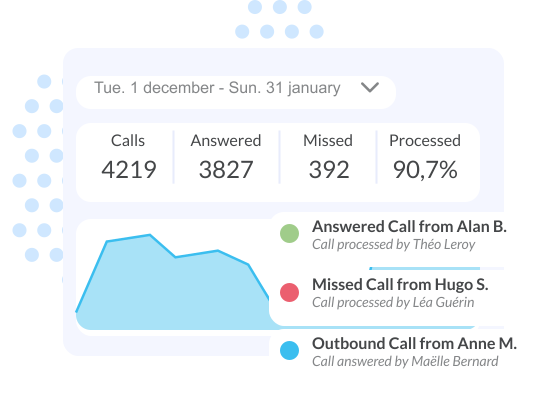
Track your calls
with precision
No more black box. Your team’s phone calls are tracked with the same level of detail as emails.
- Call logs
- Call transcription
- Analytics reports
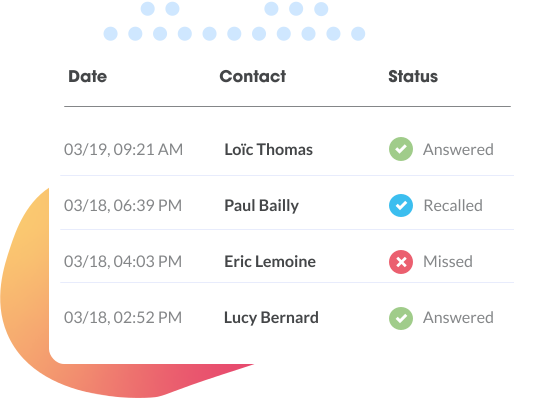
Call from anywhere
at anytime
At your desk, in a meeting room, on the go, or working remotely — your team manages calls the same way everywhere.
- Dexem softphone
- Call forwarding
- Status and availability
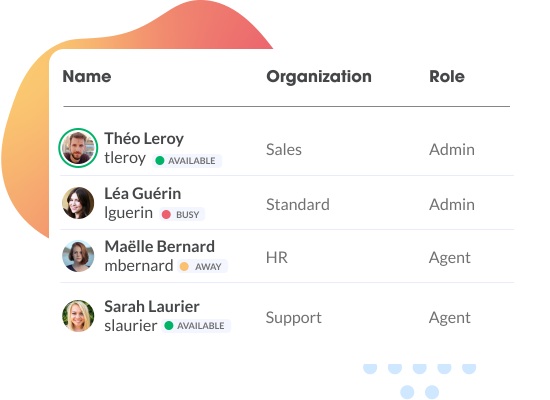
Configure your telephony
in minutes
Choose a phone system that is quick to set up, easy to use, and reliable in daily operations.
- Simple configuration
- User management
- Virtual numbers
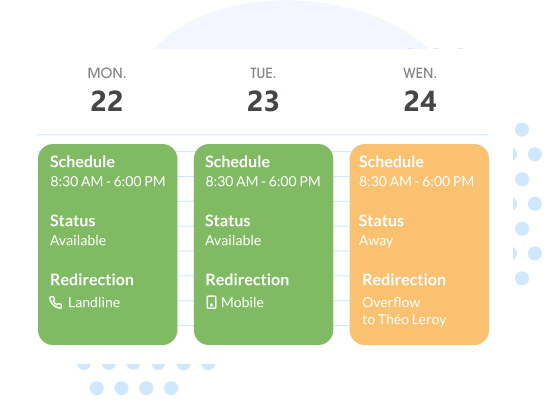
Never leave a customer unanswered
Set priority rules, avoid missing important calls, and improve team collaboration.
- Call groups
- Call transfers
- Queues
Activate agents to strengthen control over your calls
Deepen the analysis of your calls to detect more useful signals and entrust some of your calls to an AI voice agent to capture more phone opportunities.
They trust Dexem
because their calls matter

« We needed a simple and practical phone system management solution to support our growth. Dexem’s solution is very user-friendly and easy to use. »
Network Director, Côté Sushi

“With Dexem, implementation was simple. We needed a solution that could manage outbound calls and integrate easily with our CRM.”
Co-founder, Sidecare

« On one of our key campaigns, we found that 50% of conversions came from inbound calls. CPA was cut in half, and the conversion rate doubled. »
B2B Acquisition Manager, HelloWork

Get started from €19/month, no commitment
Try it for free or schedule a demo with one of our experts.
Frequently asked questions
What is a cloud telephony system?
A cloud telephony system is a modern phone technology that replaces traditional landlines by routing calls over the internet. This VoIP solution allows businesses to manage their communications through a hosted virtual platform without physical hardware.
- Flexibility: Access your business lines from any device and location.
- Scalability: Easily add users or features as your company grows.
- Performance: Integrate advanced call management tools to optimize customer experience.
What is a smart IVR system?
A smart IVR system is an advanced interactive voice response technology that uses intelligent routing to automatically direct callers to the most appropriate agent or department based on specific predefined rules and real-time data.
- Personalized greetings for enhanced customer experience.
- Time-based routing to manage business hours effectively.
- Intelligent distribution to the right specialized teams.
- Real-time monitoring of call flows and performance.
What is automated call routing?
Automated call routing is a technology that automatically directs incoming phone calls to the most appropriate agent or department based on predefined rules, such as caller input, agent availability, or specific marketing campaign data.
- IVR Menus: Callers select their destination via keypad.
- Skills-based Routing: Directs calls to experts.
- Time-based Routing: Redirects calls according to business hours.
- Geographic Routing: Connects callers to the nearest local branch.
What is telephony in CRM?
Telephony in CRM is the integration of your phone system with your customer relationship management software to sync call data. It allows teams to manage, track, and record interactions directly within the CRM for enhanced efficiency.
- Automated call logging and activity tracking.
- One-click dialing (click-to-call) for faster outreach.
- Instant lead creation from inbound call data.
- Enriched customer history with call transcripts and recordings.
What is the difference between VoIP and cloud telephony?
The difference between VoIP and cloud telephony lies in their scope: VoIP is the underlying technology that transmits voice over the internet, while cloud telephony is a complete, hosted communication service utilizing this technology.
- VoIP: Focuses on the digital transmission of voice packets via an IP network.
- Cloud Telephony: Provides a full business phone system hosted off-site with advanced management features.
How much does a cloud phone system cost?
The cost of a cloud phone system depends on your specific business needs, typically involving a flexible monthly subscription based on the number of users, chosen management features, and the quantity of required phone numbers.
- Subscription plans: Modular pricing adapted to company size.
- Functionalities: Advanced call routing and collaborative tools.
- Usage: Volume of minutes and international coverage requirements.
How to improve customer experience with cloud call management?
To improve customer experience with cloud call management, you must optimize your inbound call flows to ensure professional, seamless, and immediate interactions. This involves using intelligent routing and real-time data to enhance responsiveness and personalization for every caller.
- Automate call routing using a Cloud IVR to direct callers instantly to the right expert.
- Manage availability with time-based calendars to prevent missed calls and ensure backup redirection.
- Integrate telephony with CRM to provide agents with immediate context for personalized feedback.
- Prioritize missed calls using detailed history to proactively re-engage high-potential leads.
Which tools help my team collaborate on incoming calls?
Several specialized tools help your team collaborate on incoming calls by utilizing features such as call queuing, smart routing, and shared logs, ensuring every caller is quickly directed to the most qualified available agent.
- Interactive Voice Response (IVR) to qualify caller needs collectively.
- Real-time supervision for live team coaching and seamless call transfers.
- Simultaneous ringing to optimize response times and shared distribution.
How to build a professional welcome for my callers?
To build a professional welcome for your callers, you must implement a structured call management solution that integrates personalized greetings, an interactive voice response menu, and efficient routing rules to ensure every contact reaches the right person instantly.
- Configure personalized audio greetings.
- Set up an IVR menu.
- Define smart routing rules.
- Manage queues with music.
How to measure the success of my phone reception ?
To measure the success of your phone reception, you must track specific key performance indicators through a call management solution to evaluate your team’s responsiveness and the overall quality of your customer journey.
- Missed call rate to identify lost opportunities.
- Average pick-up time for optimal responsiveness.
- Call duration and distribution by time slots.
- IVR statistics to analyze caller navigation efficiency.


